Know the moment your site goes down, or your SEO quietly breaks
Free monitoring for uptime, SSL, and domain expiry, plus the on-page SEO signals that keep you visible in Google. Set up in under a minute.

Is your site working, and is it still right?
Most monitoring tools were built for ops teams who watch latency at the 99th percentile. We built this for the marketer who owns the traffic. You want two plain answers: is the site working, and is the page Google indexed last week still saying what it should?
Is it working? Uptime every 10 minutes, SSL certificates, and domain renewal, watched around the clock so an outage or a dead certificate never slips by unnoticed.
Is it still right? We re-read your pages and flag the silent SEO changes, a new noindex, a rewritten title, broken schema, a dropped analytics tag, that no uptime check would ever see.
First, is your site up, secure, and still yours?
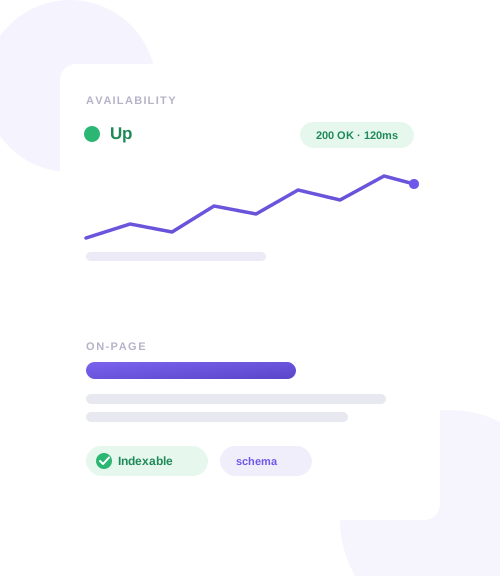
Uptime, SSL, and domain expiry, checked around the clock. The moment one of them breaks, you get an email and a browser ping. No dashboards to babysit.
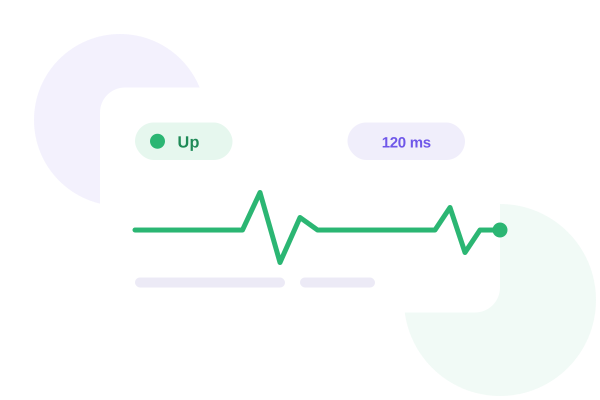
We hit your URL the way a visitor would and watch for a healthy response. The moment two checks fail in a row, you get an email. Two-check confirmation means fewer false alarms from one-off network blips.
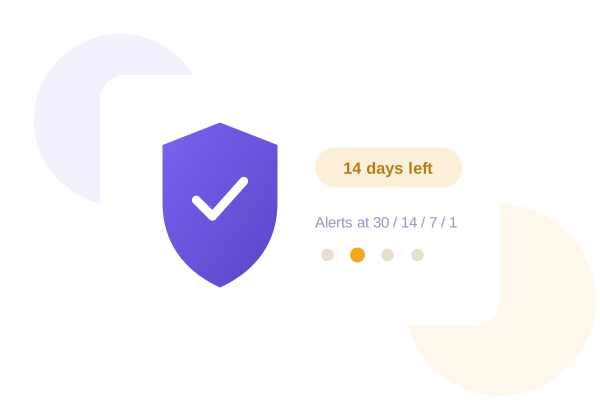
An expired certificate turns Chrome into a giant red wall. We check yours daily and email you 30, 14, 7, and 1 day before it expires, plenty of time to renew.
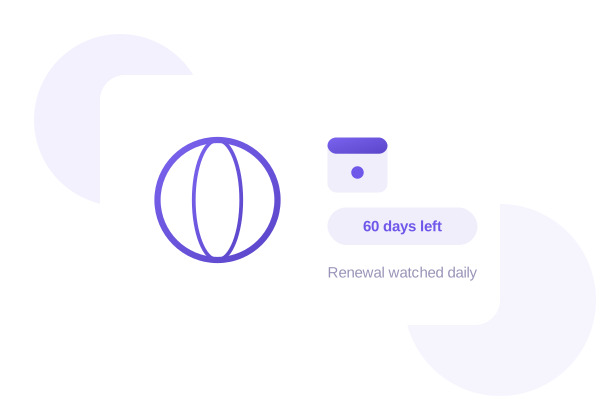
Forgetting a domain renewal can mean losing it for good. We watch your WHOIS record daily and warn you 60, 30, 14, and 7 days out, with enough time to act.
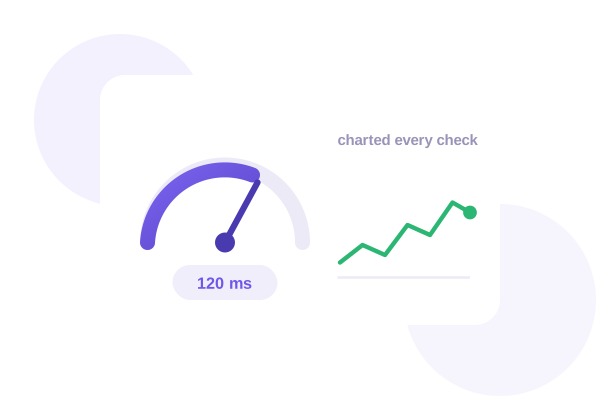
Every uptime check measures how long your site took to respond. We chart it for you so you can spot the slow days before they become bad days.
Alerts arrive from a dedicated IP so they reach the inbox, not spam. Want them instantly? Turn on browser push and we'll buzz you wherever you are.
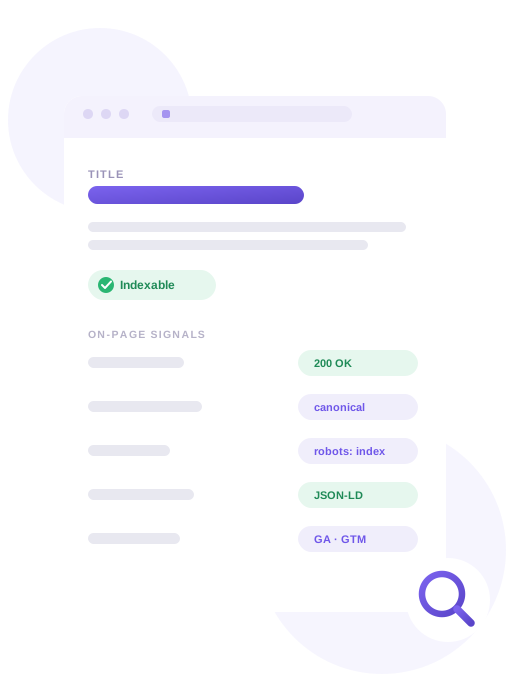
Then, is it still saying the right things to Google?
A page can return a perfect 200, serve a valid certificate, and still be falling out of search. A deploy ships a stray noindex on your best pages. A CMS update rewrites every title. Someone tidies robots.txt and blocks the whole site. Nothing goes down, nothing turns red, and your traffic drains for three weeks before anyone connects the dots.
We re-read each page on a schedule, hourly by default, and compare it to the last version we saw. When something that matters to search changes, you get the same clear alert you'd get for downtime, with the before and after side by side.
Indexability, computed for you. We read meta robots, X-Robots-Tag, canonical tags, and redirect chains, then boil them down to one answer: can Google index this page right now?
Change detection, not noise. We alert only when something actually changes, and we show you exactly what it was, so a quiet edit never turns into a silent ranking drop.
Every silent SEO change, caught
The on-page signals that move rankings and revenue, watched on every check. Turn alerts on for the ones you care about and leave the rest quiet.
The most expensive SEO bug is a page that silently went noindex. We track meta robots, X-Robots-Tag, canonical tags, and redirects, then tell you the day a page stops being indexable.
We diff your robots.txt every day and flag a new Disallow before it eats your crawl budget. We watch your sitemap too, and tell you exactly which URLs were added or dropped.
Your title tag, meta description, H1, and heading structure are prime search real estate. If a redesign or a stray edit changes them, you see the old and the new, not a ranking dip weeks later.
We validate your JSON-LD schema and check the part most tools skip: that it matches what visitors actually see. A price in your Product markup that doesn't match the page is exactly what pulls your rich results.
A deploy that drops your Google Analytics or Tag Manager snippet costs weeks of data you can't get back. We confirm your tags are present on every check, and spot marketing pixels like Meta, LinkedIn, and TikTok coming or going.
Content changes, internal and outbound links, image alt text, OpenGraph and Twitter cards, product price and availability, and your own custom XPath, CSS, regex, header, or JSON checks for whatever is unique to your site.
One screen that tells you which sites are okay
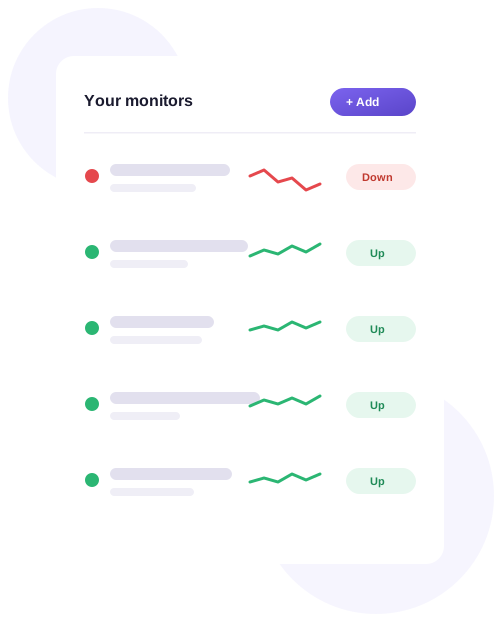
When you log in, you see every site you're watching in one list. Green means everything's working. Yellow means something is coming up soon. Red means stop reading this paragraph and check your alerts.
Each site shows its current uptime, response time over the last week, days until SSL and domain expire, and a flag when an SEO signal just changed. No drilldown required.
Click into a site for the last weeks of checks, every incident with its duration, the response-time chart, and a running log of on-page changes. Helpful for spotting patterns; ignorable when there's nothing to see.
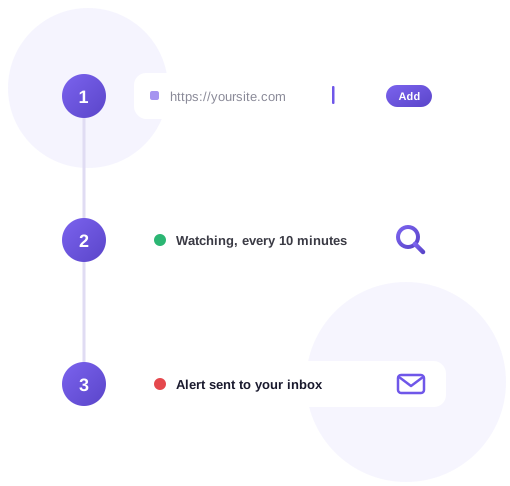
Paste a website address you want to watch. That's the setup. No script, no DNS change, no SDK.
The first uptime check fires within seconds. SSL, domain, and your first SEO scan run within the hour. Your dashboard fills in with real data on day one.
If a check fails twice in a row, your SSL is about to expire, your domain renewal is coming up, or a page's SEO quietly changes, you get an email. If everything's healthy, your inbox stays quiet.
Built for managing more than one site
If you run client sites, agency portfolios, or your own collection of properties, the dashboard scales without getting noisy.
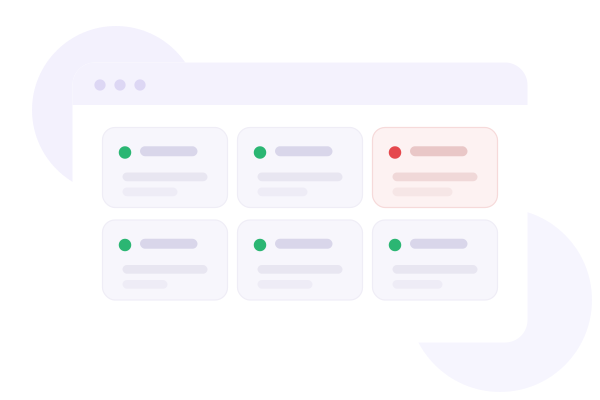
Add as many sites as your plan allows. Group them, tag them, and the dashboard flags only the ones that need your attention, whether that's downtime or an SEO signal that just moved.
We don't email you about healthy sites. Alerts fire only when something changes: a site goes down, a certificate nears expiry, a domain renewal looms, or a page's SEO shifts.
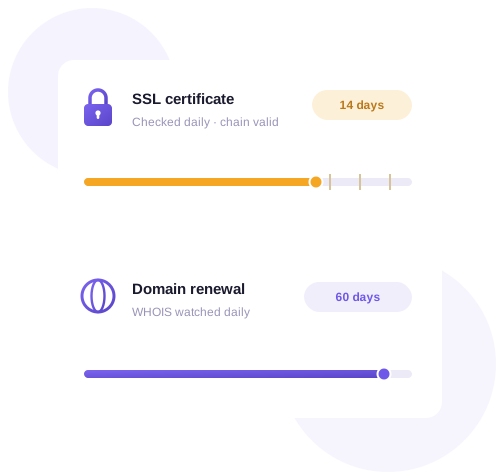
Domain renewals slip through the cracks. They are billed annually, often via a forgotten email address, often to a credit card that expired two years ago. We watch the WHOIS record every day and email you 60, 30, 14, and 7 days before yours runs out, with time to fix it before visitors hit a dead landing page.
An expired certificate turns Chrome into a red wall. Visitors bounce, bots stop crawling, conversions drop. We check every certificate daily, alert you the moment it crosses the 30-day mark, and keep pinging until it's renewed.
Alerts at 30, 14, 7, and 1 day(s) before expiry.
Works the same way for Let’s Encrypt, Cloudflare, and commercial certificates, we check what your live URL actually serves.
Made for the person who owns the site, not the server
Most monitoring tools assume you have a DevOps team, a Slack channel for incidents, and a budget for observability. You probably have a few sites you care about, a manageable inbox, and zero patience for configuring thresholds for things you don't understand.
We made the simplest thing that works. Add a URL. Get clear answers: is the site up, is the certificate current, is the domain safe, is the page still indexable and on-message. If something breaks, you'll hear about it. If nothing breaks, you'll hear nothing. That's the whole product.
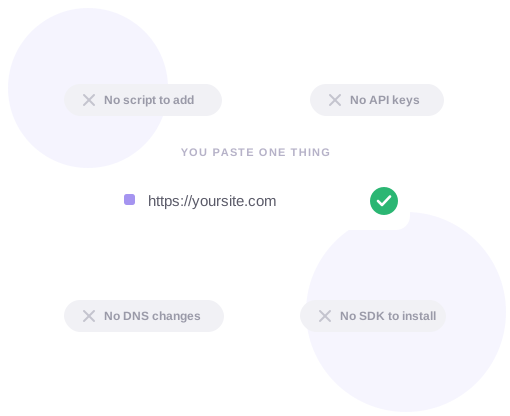
Nothing to install. Nothing to integrate.
-
No SDK, no tag, no tracking script. We request your URL the way a visitor would and read the HTML the way Google does. If a real visitor or a search bot would see it, so do we.
-
No DNS changes, no certificates to upload, no API keys to wire up. The only thing you ever paste in is your website URL. Everything else, uptime, SSL, domain, and every SEO signal, happens on our side.
Plans
Every plan includes every check and every alert channel. Your monitor limit grows with your Keywords Everywhere subscription.
1-month history
2-month history
4-month history
8-month history
1-year history
Every plan includes uptime monitoring, SSL & domain expiry alerts, full on-page SEO and schema monitoring, and email & browser push notifications.
Common questions
If you don't find your answer here, get in touch and we'll get back to you.
-
1. How do I get started?
Sign in, paste a URL, done. Your first uptime check fires within seconds, and your SSL, domain, and SEO data fill in within the hour.
-
2. Is it really free?
Yes. No trial that expires, no paid tier that hides the features you actually want. Add sites and the tool just works.
-
3. What do you actually monitor?
Two things. Whether your site is working: uptime, SSL certificate expiry, and domain expiry. And whether it's still right for search: indexability, titles, meta descriptions, headings, canonical tags, structured data, robots.txt, XML sitemaps, analytics and tracking tags, and anything you define with a custom rule.
-
4. How often do you check?
Uptime, every 10 minutes. On-page SEO, every 12 hours by default and configurable per site. SSL, domain, robots.txt, and sitemaps, once a day, since those don't change minute by minute.
-
5. Do I need to install anything for the SEO checks?
No. We fetch and parse your live HTML the way a search engine would. There's no script to add, no tag to maintain, and nothing that touches your site's code.
-
6. How is this different from a plain uptime monitor?
An uptime monitor tells you the site loaded. It can't tell you a deploy just set your top pages to noindex, dropped your analytics tag, or broke your schema. Those failures never turn the site red, and they're the ones we were built to catch.
Still have a question?
Get in touch Get in touch